Dahlia Madness!
In the summer, gardening is my “raison d’être.” I’ve been consumed with growing dahlias the past two years, and this past week, I feel my dahlia obsession reached peak silliness/madness.
But before I share the details, let me give you a little dahlia background.
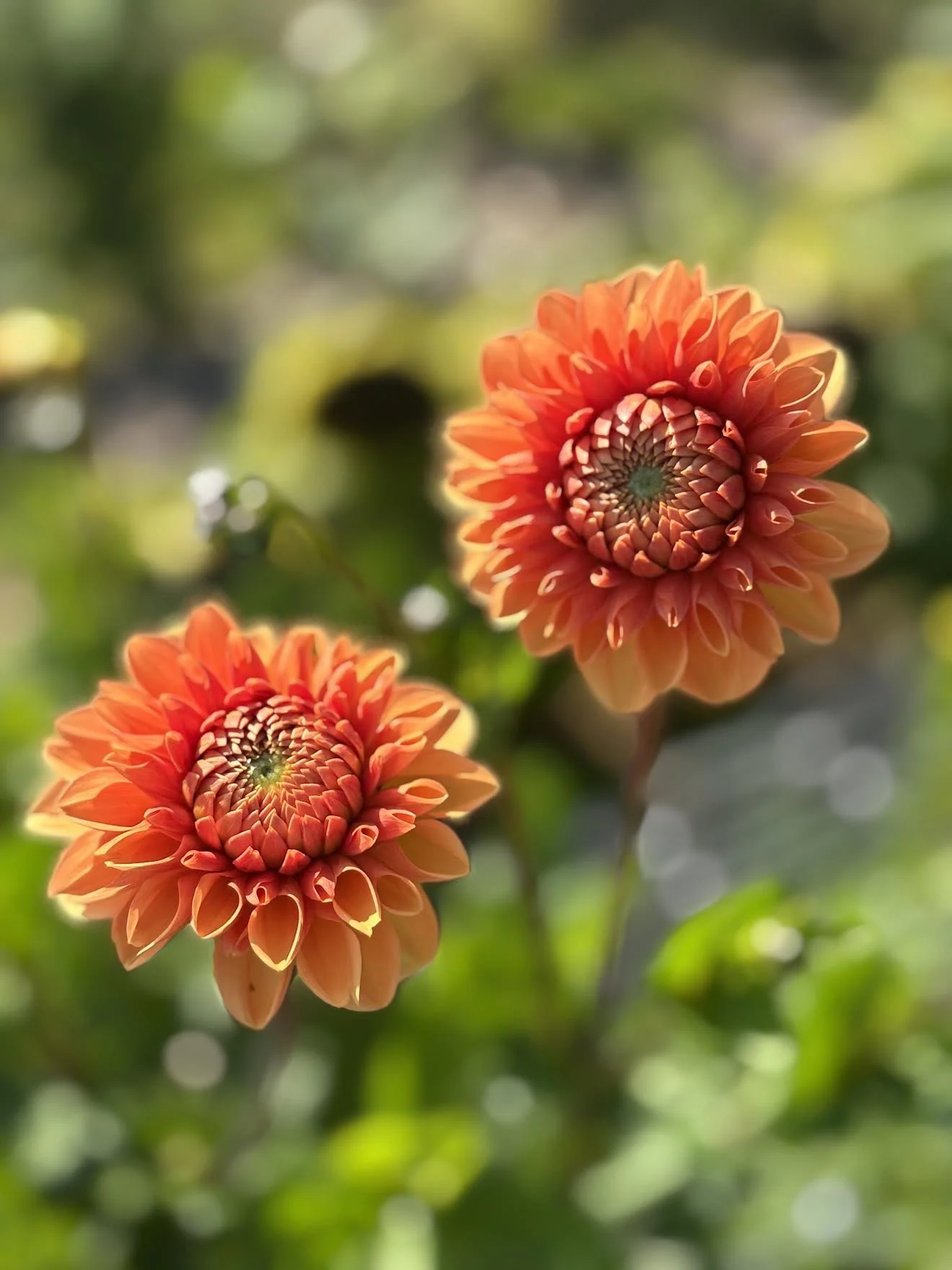
Some Maarn dahlias I grew last year. Or were they Jomandas?
Dahlias grow from tubers. Each tuber costs between $10-$20. One tuber produces one plant above ground, but it also grows a cluster of tubers underground. In the fall, the clusters can be dug up and stored so you can plant them next year. It saves a lot of money, especially if you want to grow lots of dahlias. This is what I did last year.
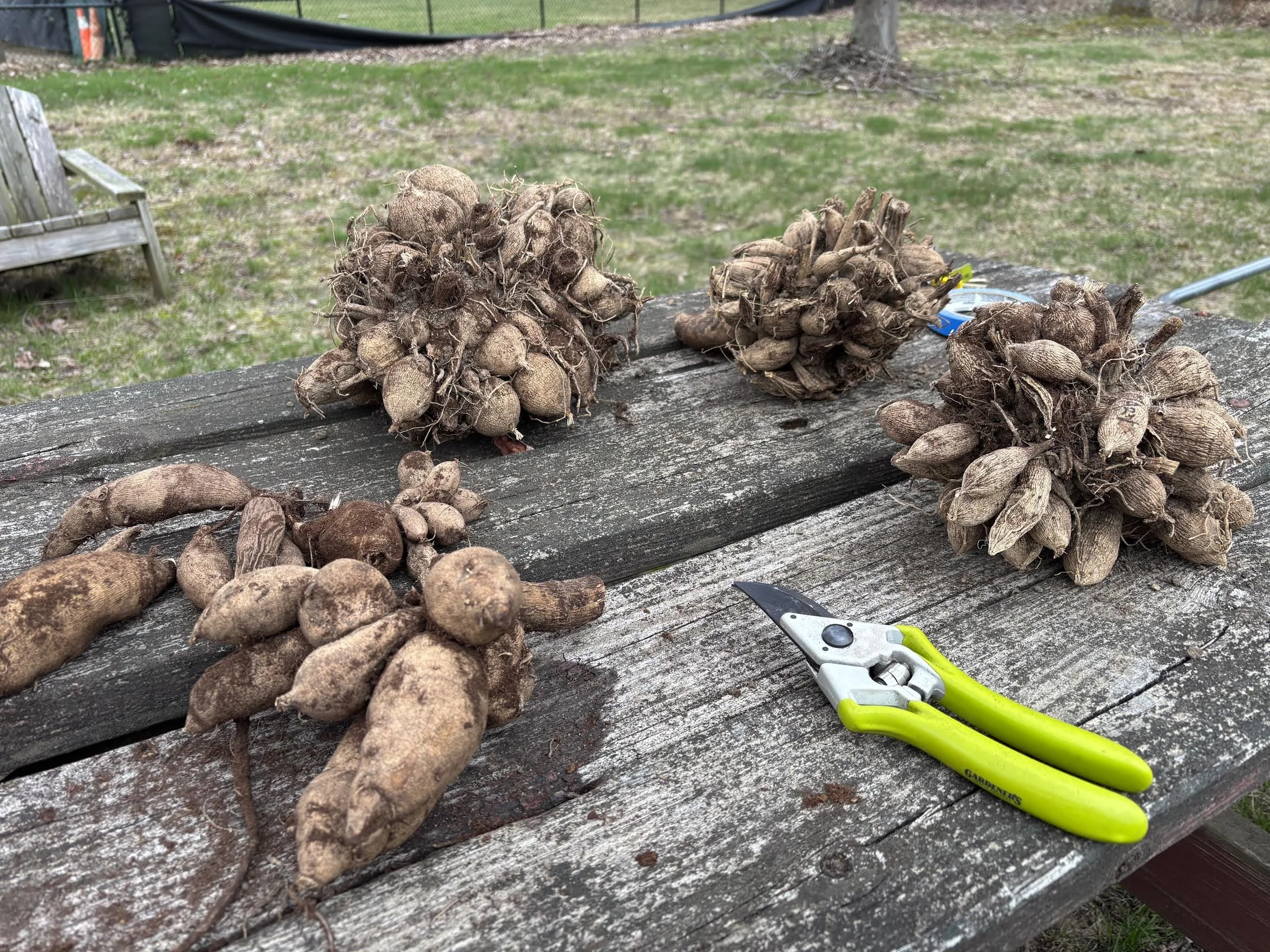
Dahlia tuber clusters that I saved from 2025.
Several days ago, I pulled the last of my tubers out of winter storage and took them to the community garden to set up my tuber assessment station. To my excitement, all my tuber clusters sprouted multiple eyes. (A dahlia won’t grow unless the tuber has an eye.) And, fortunately, the clusters had eyes spread out enough that I could cut the clusters in half or in thirds—each chunk with an eye grows its own plant. And so I began chopping, sawing, and stabbing tuber clusters on the community garden’s picnic tables with an old kitchen knife. Normally I’m concerned about how I look in public, but in those moments at the picnic table, I had no qualms about acting like a mad woman. A fellow gardener hollered at me to be careful. “Just performing surgery on some dahlias tubers over here,” I yelled back and kept hacking away.
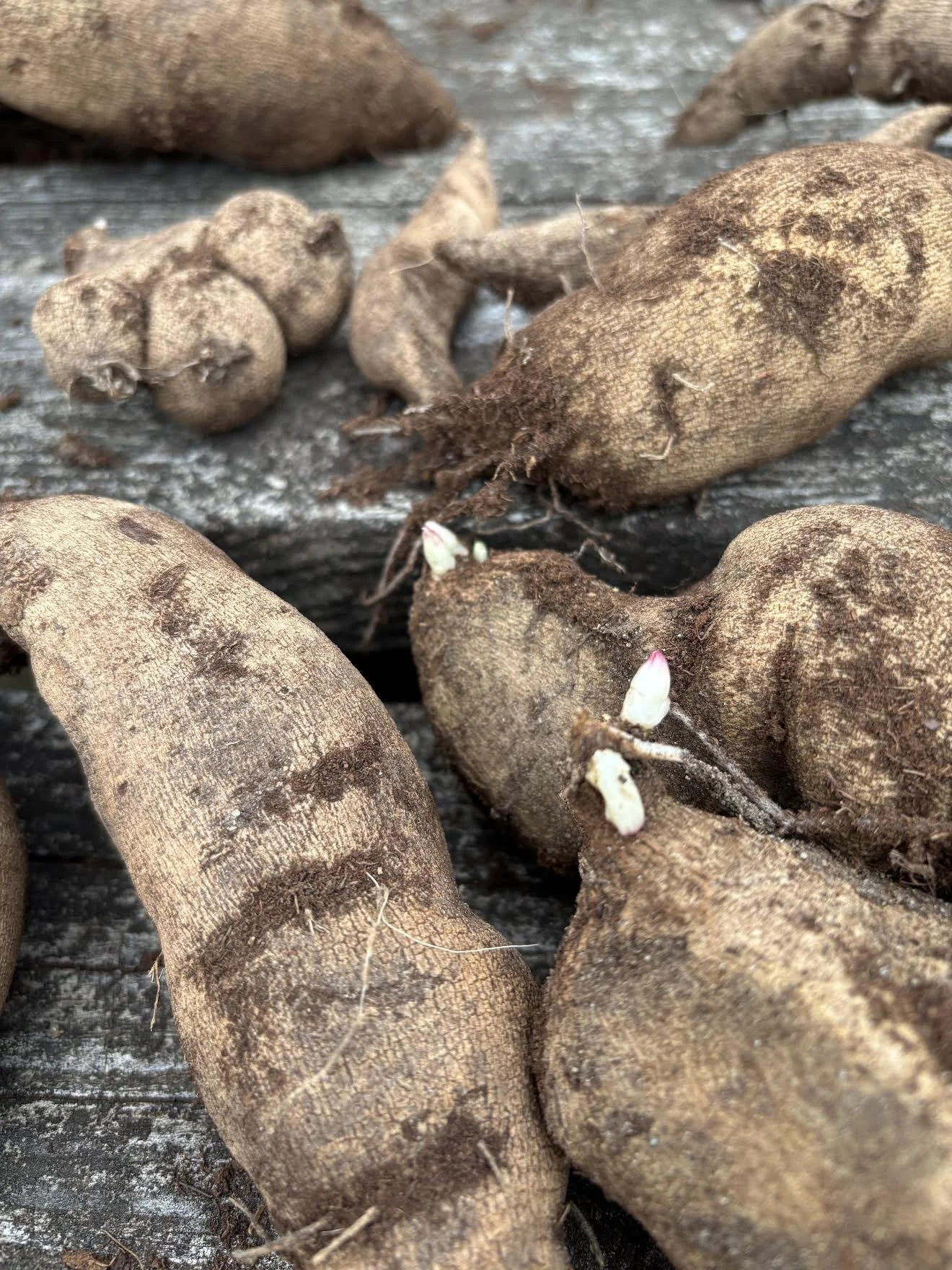
Dahlia tubers with eyes. Hooray!
Surgery completed, I decided to store some tubers back home in my fridge to slow down the growth of their eyes until I was ready to plant them. But the tubers had to be wrapped in plastic to prevent them from drying out. I opened my special kitchen drawer dedicated to plastic bags, pulled out every single one, and threw all 30 or so of them on the floor. (Does anyone else have a drawer like this or is it just me?) On my hands and knees, I poked around for just the right bags to fit my tubers. Then, I sprinkled a little water in each bag, wished the tubers well, and put them in my fridge. Both crisper draws were filled with tubers, bags of tubers settled into the door next to the soy sauce and soy milk, and even more bags crowded in next to my yogurt and assorted leftovers.
That task finished, I went to the basement of my building to assess the other tubers that I’d pulled out of hibernation two weeks before. (My basement is too warm to store tubers all winter, so they spent the winter in a different basement that wasn’t heated. Storing them in a warmer spot just prior to planting helps “wake them up.”) I was excited that some tubers sans eyes two weeks before were now sprouting eyes like crazy. I grabbed one cluster with multiple new eyes, took it up to the parking lot, and divided it into three sections with the knife—down on my hands and knees, stabbing a clump of brown oblong shapes behind my car as if possessed by some sort of dahlia demon. It was a comical scene I’m sure some neighbors witnessed and wondered about, but I don’t care.
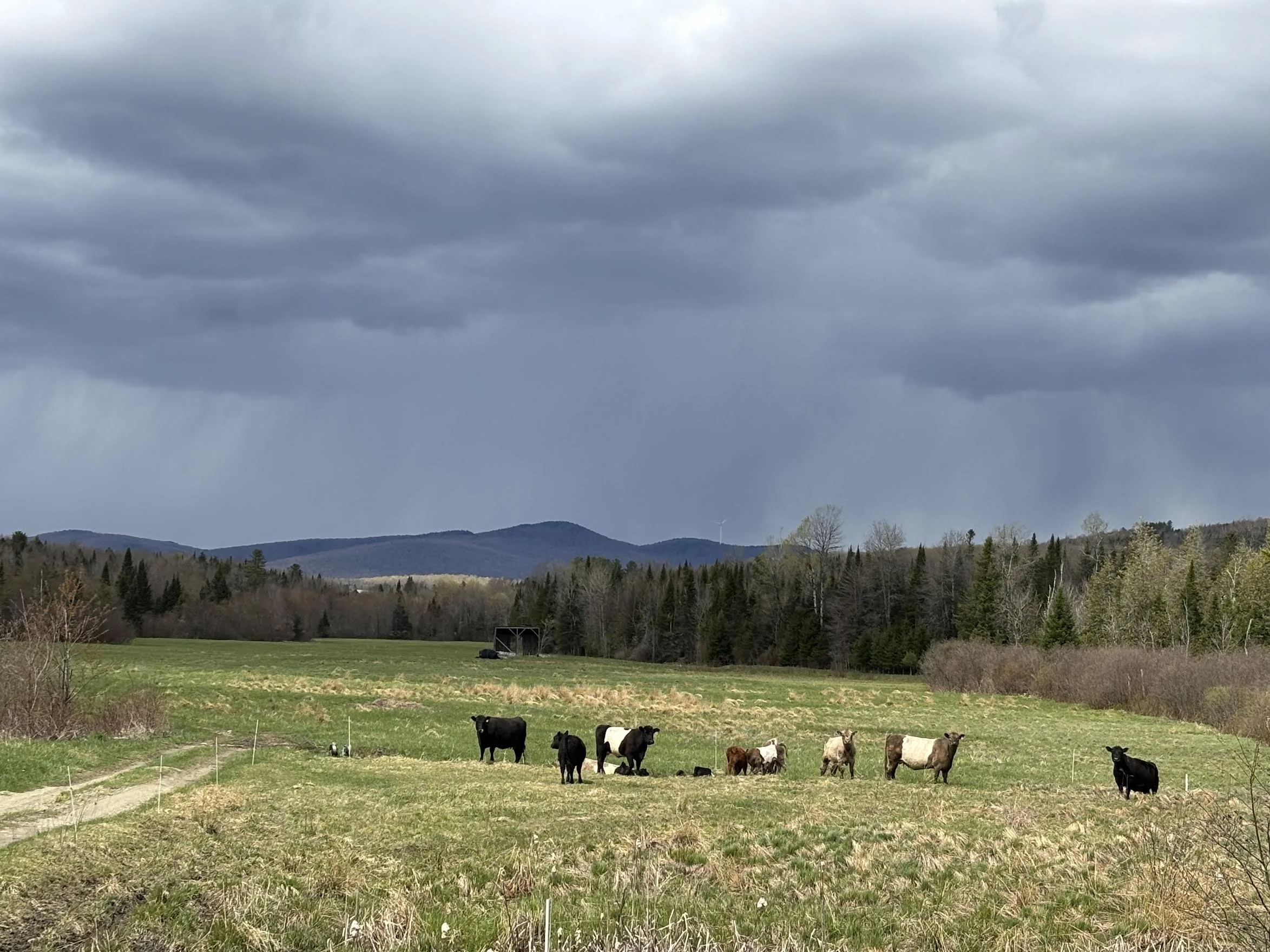
Some cows I said “Hi!” to on the way to pick up new dahlia tubers from Morey Hill Farm in Craftsbury, VT.
On Monday of this week, I skipped work to drive four hours round trip to pick up five new dahlia tubers I paid around $50 for a month or so ago. But didn’t I store my 2025 tubers so I could save money and not have to buy new ones this year? That is correct. But what can I say? I may have a dahlia problem. I simply could not help myself from acquiring more.
Luckily, I am not alone in thinking that dahlias are extraordinary. When admiring one of my dahlia blooms last year, a friend said it was so beautiful they thought it must be proof that God exists. It was a lovely sentiment though I don’t necessarily believe in God. But I do believe in the magical power of dahlias and the happiness—and silliness—they bring me.
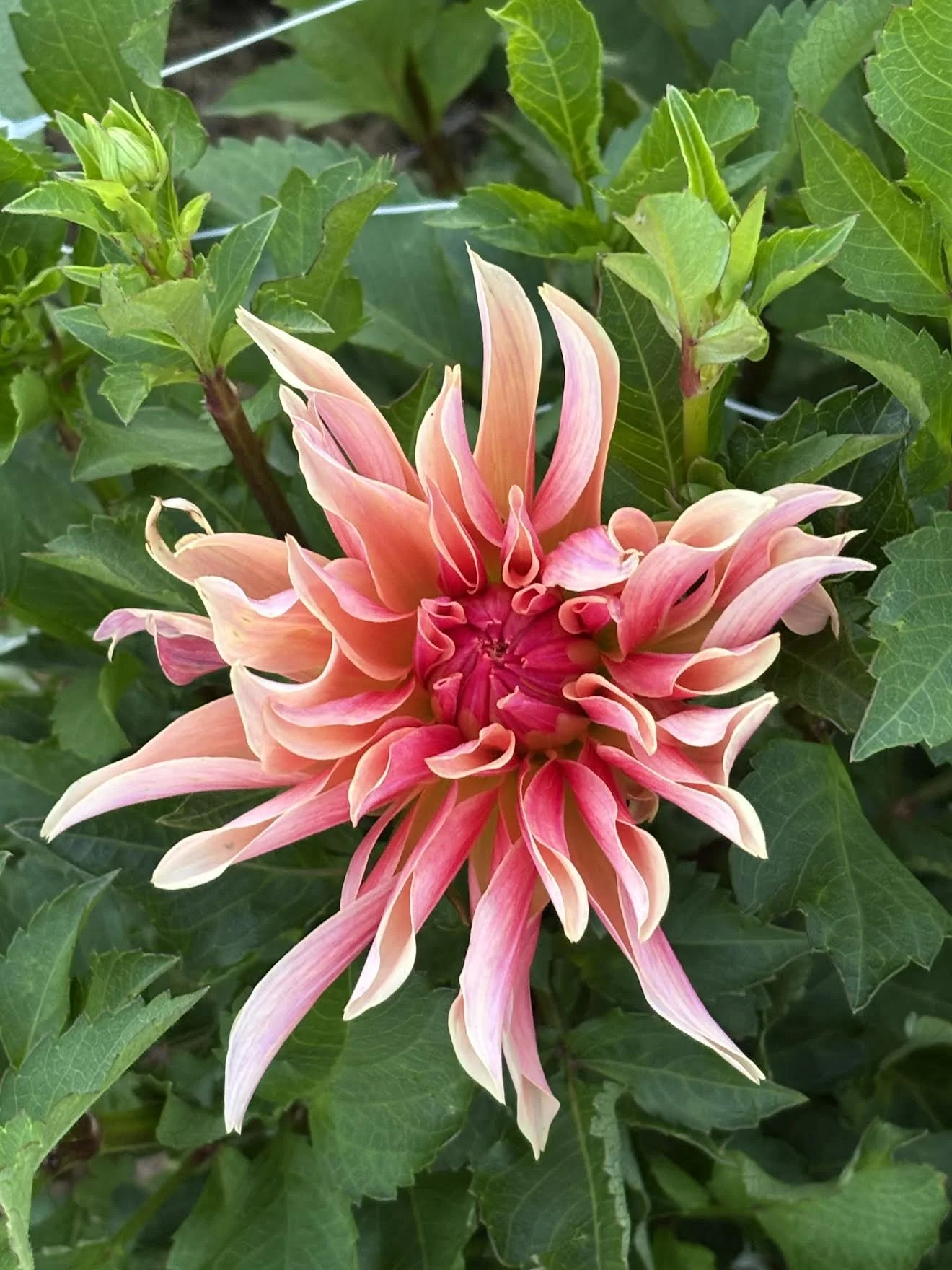
This is a Labyrinth dahlia I grew last year. This is the one my friend was referring to.